Our Pulte built home is less than 3 years old—AND—it has cracked and separated exterior brick/mortar, cracked drywall and floor tiles, doors and windows that are out of square (one window is jammed), diagonal cracks in drywall above door and window frames, caulk separating from baseboards, doors, windows, soffit, and siding; and 7 cracks in the foundation.


I know there are many struggling homeowners with problems that are eerily similar to ours (search online for ‘Pulte Reviews and Complaints’). However, realizing that other new Pulte homes are falling apart at the seams does not make me feel any better. In fact, knowing that there are others in the same situation makes me even sadder. 

With blind faith, we trusted Pulte would build us a good house and that was a big mistake! Since I am not sure how to explain how tired and distressed I am right now, without explaining some of what I have already been through — I will go back to the beginning of this nightmare and start there:
================
PULTE NEW HOME NIGHTMARE
March 2016—we finalized our purchase of a new Pulte home in a 55+ Del Webb community. We thought that a newly built house would not have as many problems as an older home, but we were wrong. The quality of the construction is terrible.
Since I moved into this house a few months before my husband did, I ended up dealing with a long list of issues by myself. Major stress! The first time it rained, the roof began leaking into the front bedroom and the garage. I was upset. It took a few weeks of arguing with Pulte before they sent a roofer out to investigate.
While the roofer was inspecting the valley near the right side of the front arch, he noticed a small metal square sitting on the corner of the flashing. He said, “What is this thing doing here?”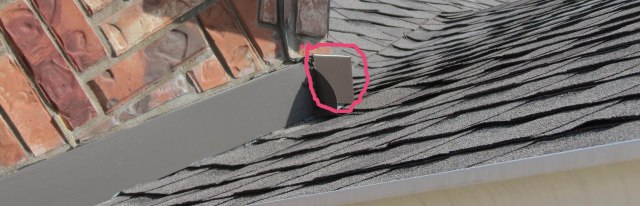
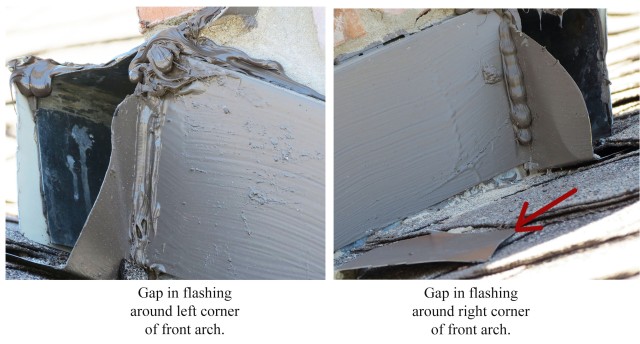
When he lifted the square “thing” up, I could see a big gap in the flashing there (I did not have a ladder, but I did have a camera with zoom lens). Since I wanted to take a few photos, the roofer left the metal square lying on the shingles next to the flashing for a few minutes. Here are 2 of my photos of the flashing on both sides of the front arch:
======
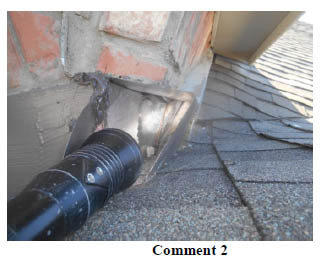
On March 21, 2016–our home inspector did note that the flashing in these areas was ‘suspect’ in his final inspection report (he also included a photo). He said that these areas should be inspected by a roofer to ensure that the flashing/counter flashing had been installed properly. We gave the report to the Pulte field manager. Three days later, right before we closed on the house, we were assured that all repairs had been made. However, when the roofer lifted the ‘small metal square’ off the corner of the flashing on June 16, 2016, I could see that the original gap was still there. The small metal square the roofer removed was not in the home inspector’s photo (below).
==========
Sigh. For the next hour, I stood on the ground below and watched as the roofer repeatedly tried to close the gaps. In frustration, he complained that it was impossible to make flashing fit correctly around such uneven brickwork. See how the bricks are hanging out beyond the edge of the flashing? What a mess!
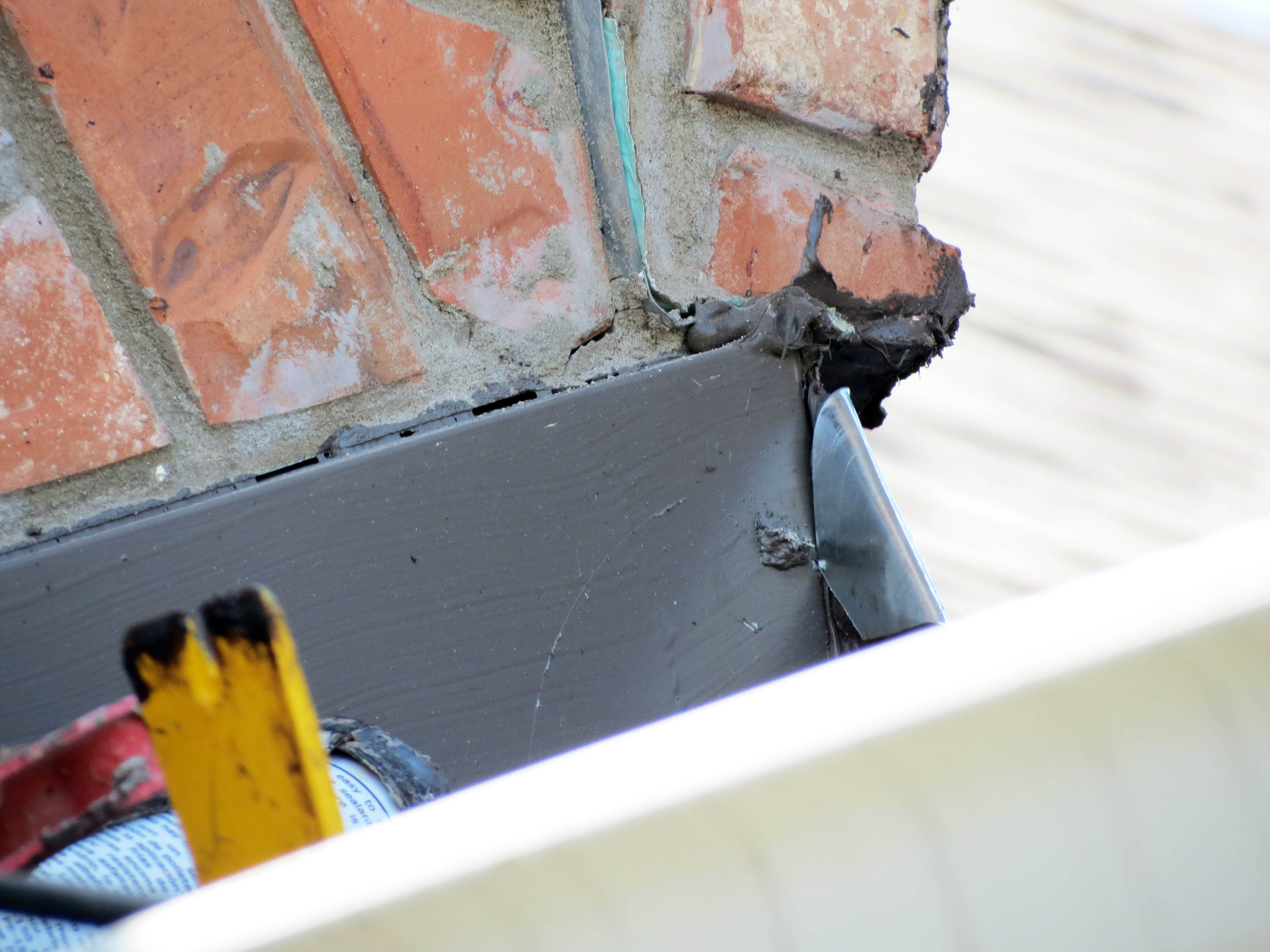 The roofer kept taking the flashing apart and trying again, but the gap in the flashing reappeared every time he attempted to make it align with the brick. He finally gave up. He said that the bricks in this area needed to be removed and redone correctly by whoever had done the brick and mortar, because dealing with sloppy brickwork is NOT the responsibility of a roofer!
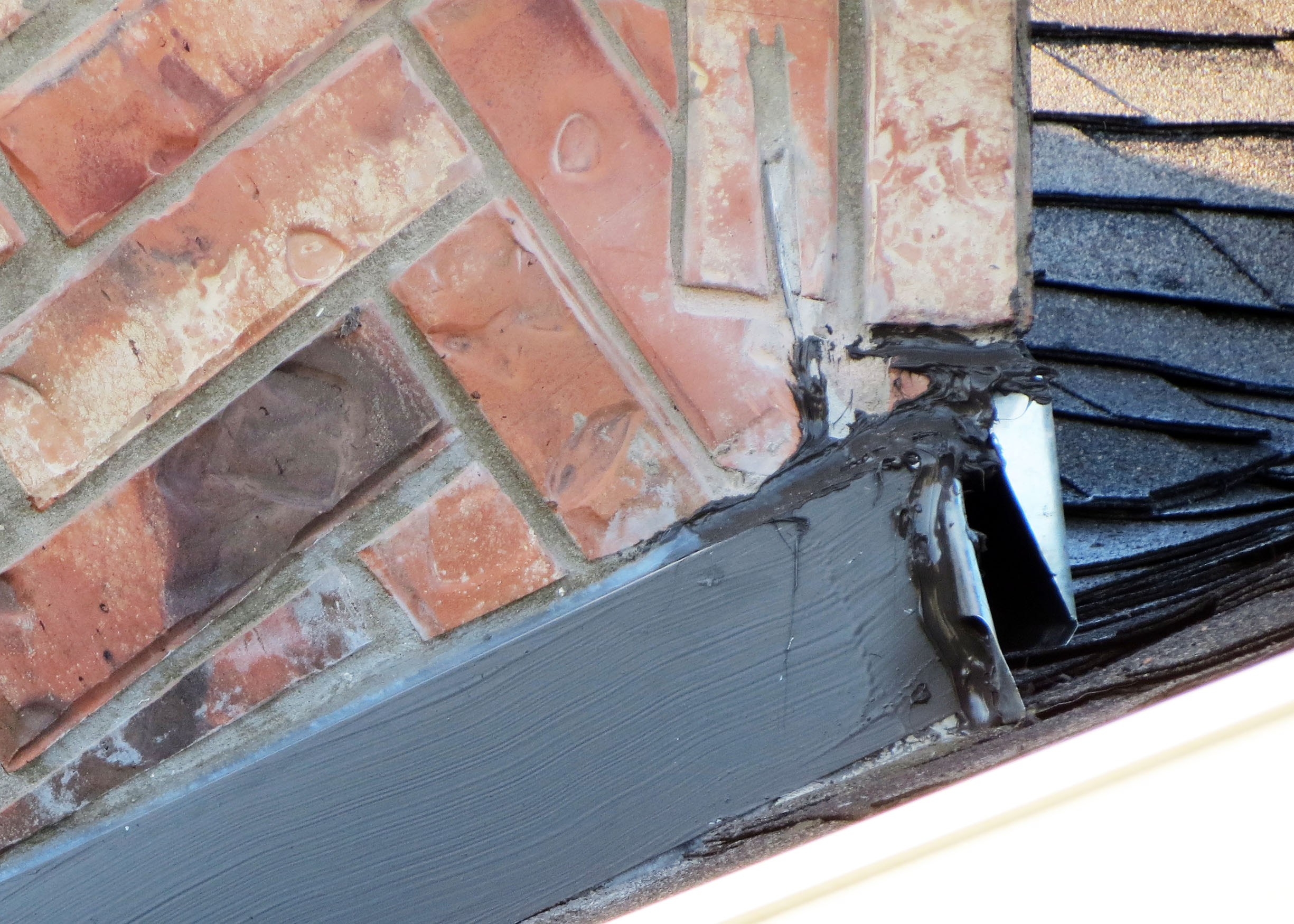
Because of the bricks, I could see that this was not going to be a quick or easy fix. In spite of hours of work, all that the roofer had been able to do was make the flashing gaps a little smaller. (How he got tar up onto the soffit above, I am not sure).
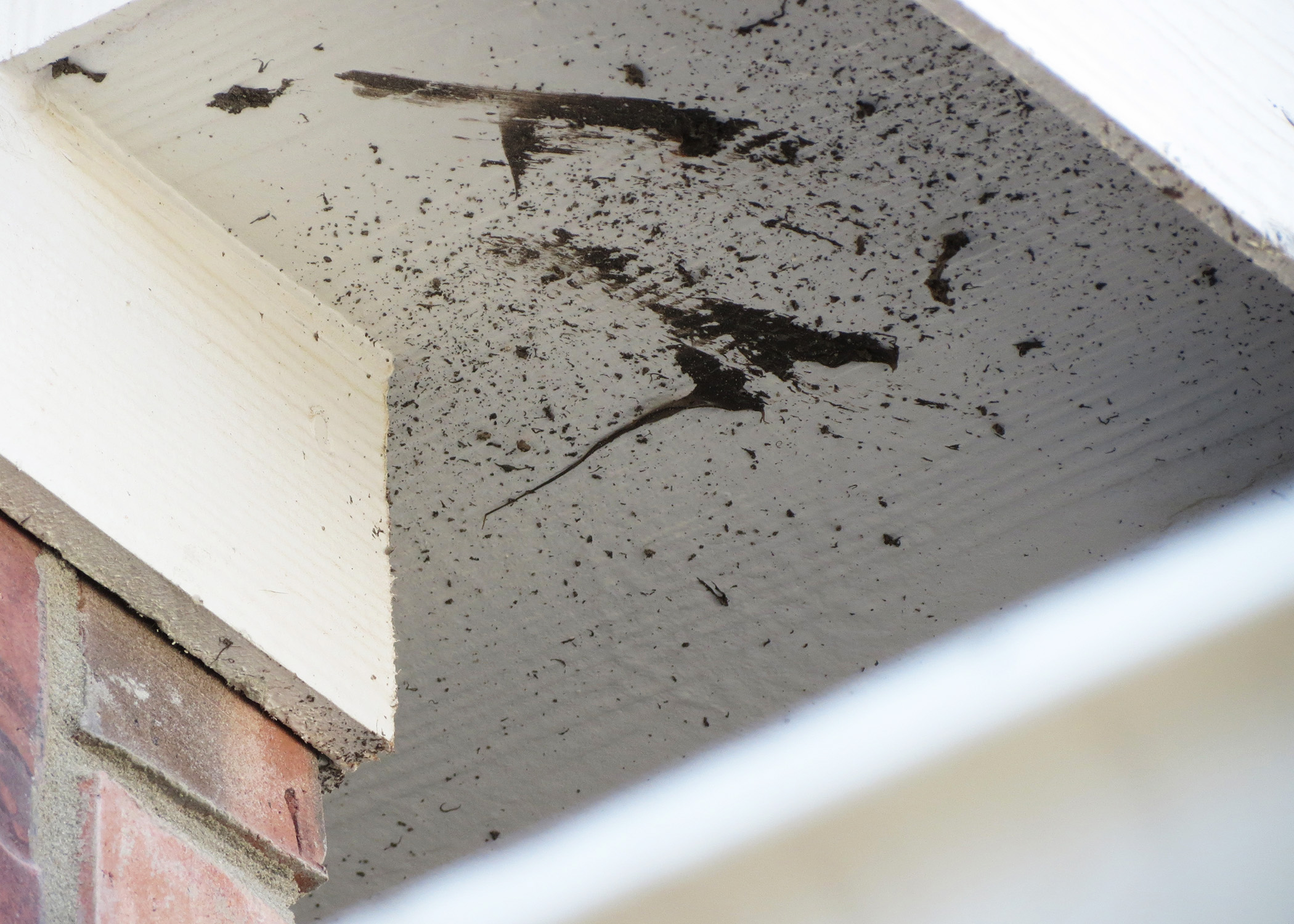 As I stood there staring up at the nightmare on my roof, I felt totally overwhelmed. The situation had not gotten any better. There was a possibility of more rain in a few days, and I could easily see that the roof was going to leak again. I was extremely concerned about additional rainwater falling into the house. On top of everything else, I am allergic to mold.
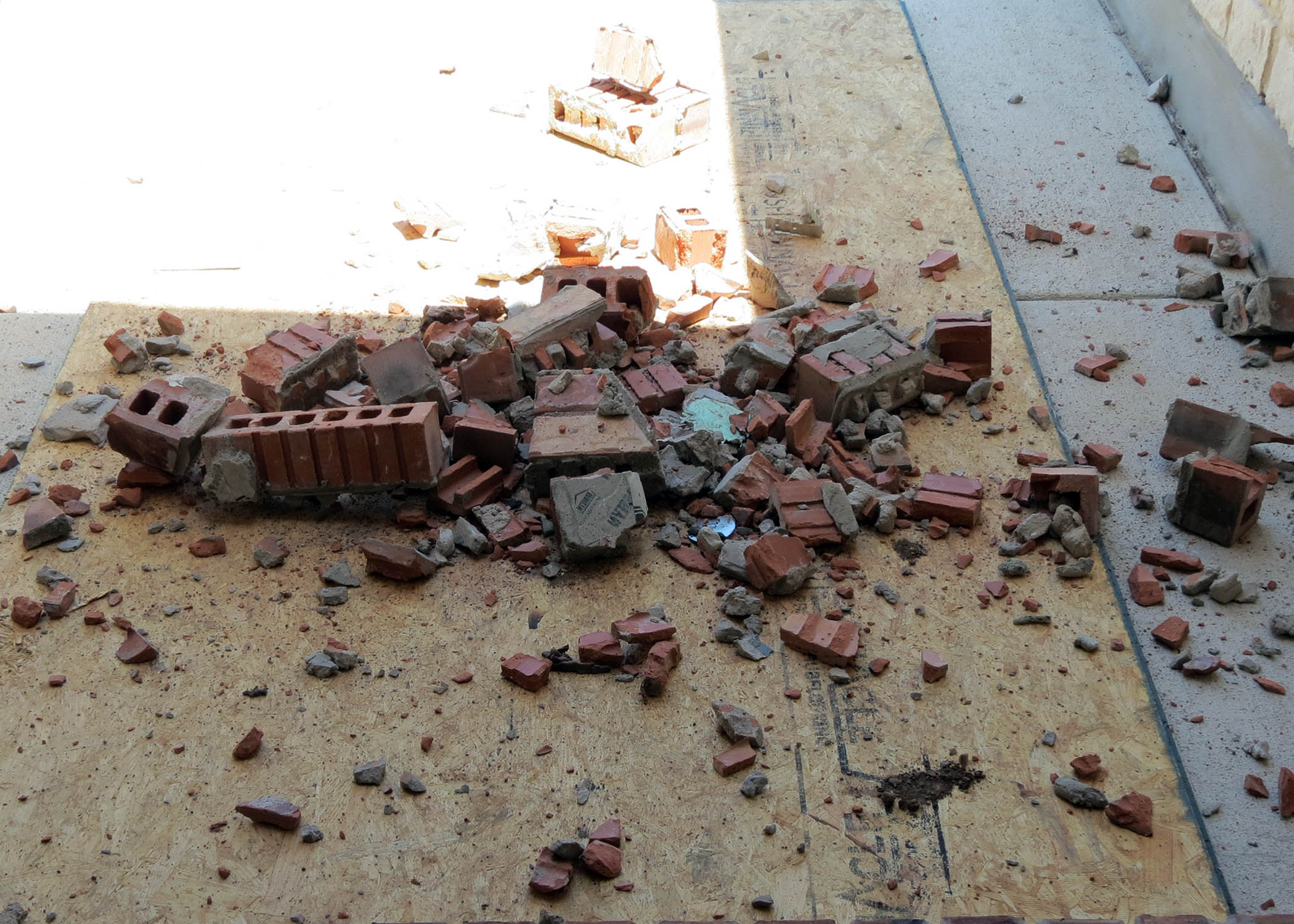
About a week later, after a pallet of brick was delivered to my house, Pulte sent out a few of their people to start working on the bricks around the front arch. Soon after they arrived, the workers began pulling bricks out and tossing them from the roof to the ground.
 A rectangular sheet of particle board was placed over the center of the cement below, but there were also bricks falling down onto the sides where there was no protection at all. I asked them to stop for a few minutes, so I could bring out some broken-down cardboard boxes to cover the rest of the cement. I didn’t need a damaged walkway.
 At some point during all of this, Zone 3 of the in-ground sprinkler system started to leak underneath the sod on the right side of my yard. This was the 3rd time that a section of the sprinkler system had malfunctioned, but at least a sprinkler leak in the ground is not as frightening as a leaking roof. I turned the water off.
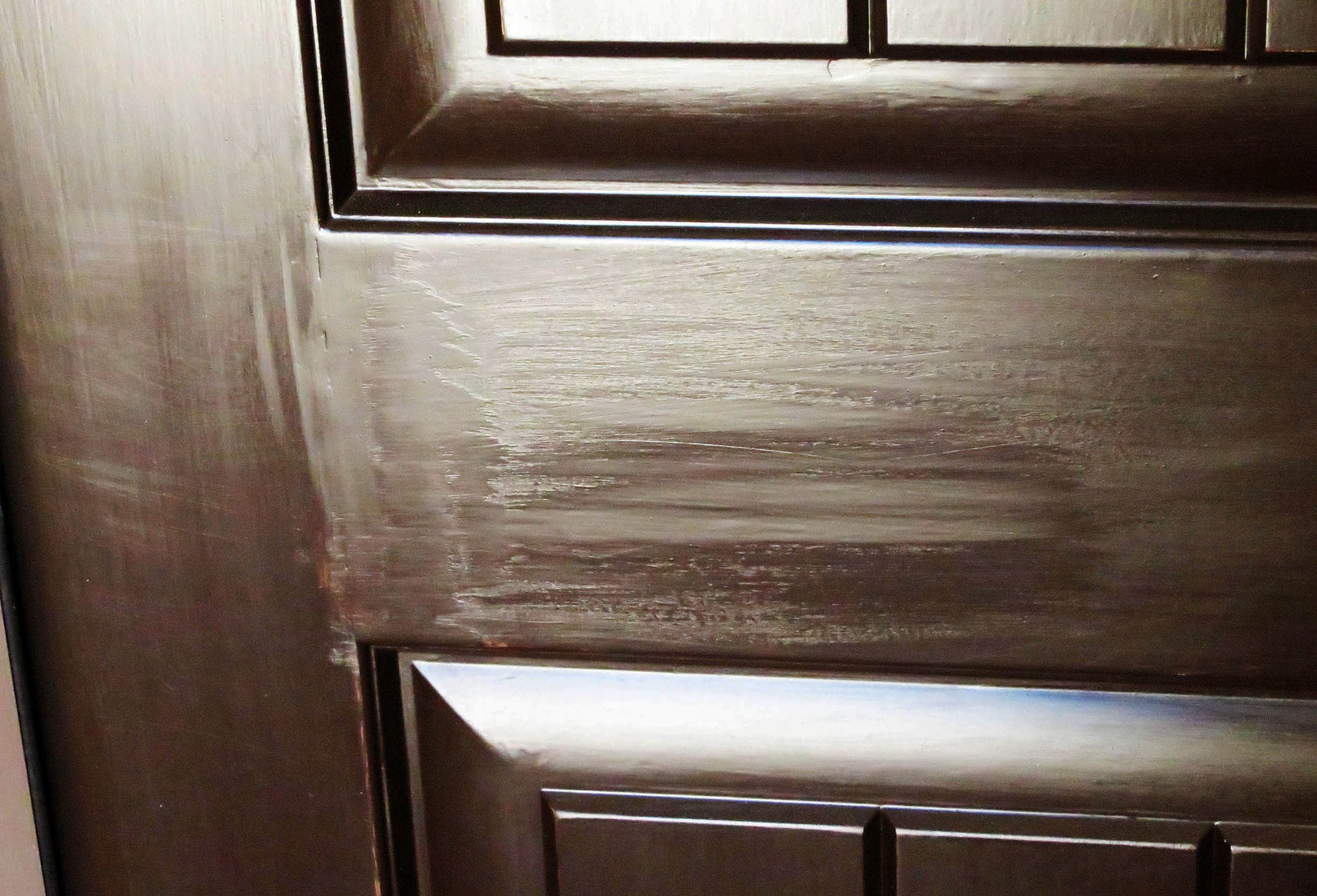
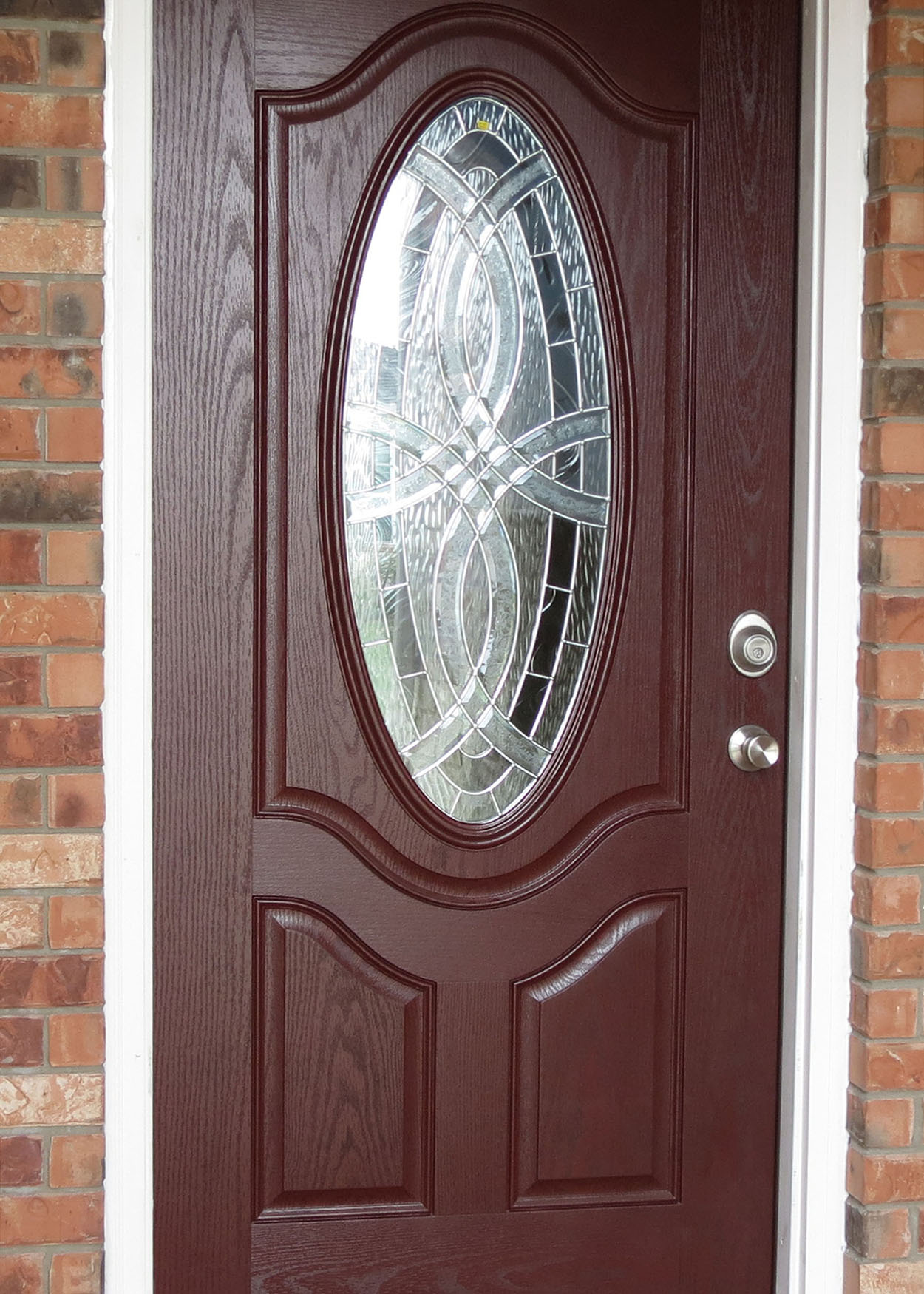
 Watching the front of the roof being torn apart and looking at the swamp in my yard, I felt like I was sinking. Adding insult to injury, my front door looked like it had been damaged before it was painted. Why did the builder install a door in this condition on a new house?
 =========
QUESTION:
WHY, after seeing such a lack of quality and craftmanship, did we buy this house?
ANSWER:
In order to have a new house built, a non-refundable percentage of the final purchase price (‘earnest’ money) has to be paid in advance. After that point, if the prospective buyer decides not to buy the house even for very legitimate reasons, the builder does not have to return the earnest money.
========
In regards to the front door, I did notify Pulte of the problem and they sent out a painter with a brush and a small can of mahogany gel stain. However, the mahogany gel stain was so thick that the painter had difficulty trying to spread it evenly on the door. Hard to believe, but the appearance of the door was a little worse by the time the painter left.
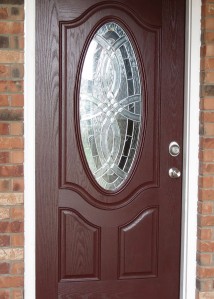
I couldn’t take it anymore. In my eyes, the Pulte door began to look like the entrance to homeowner hell. So I drove down to the local Lowe’s Home Improvement store and bought a front door that didn’t look battered and abused. I paid Lowe’s to install it for me and then I painted the trim. Immediately, the front entry looked much better. Thank you Lowe’s!
A few days after I had the front door replaced, the French doors at the opening of the office room caught my eye. Oh no! What now?! For some reason, the doors no longer lined up vertically or horizontally with each other. How could this be? The doors were even when we did the final walk-through with the home inspector only 2 1/2 months ago! I had no clue why they had suddenly shifted so dramatically, until I looked up and saw the strange alignment of the strike plates above the French doors.
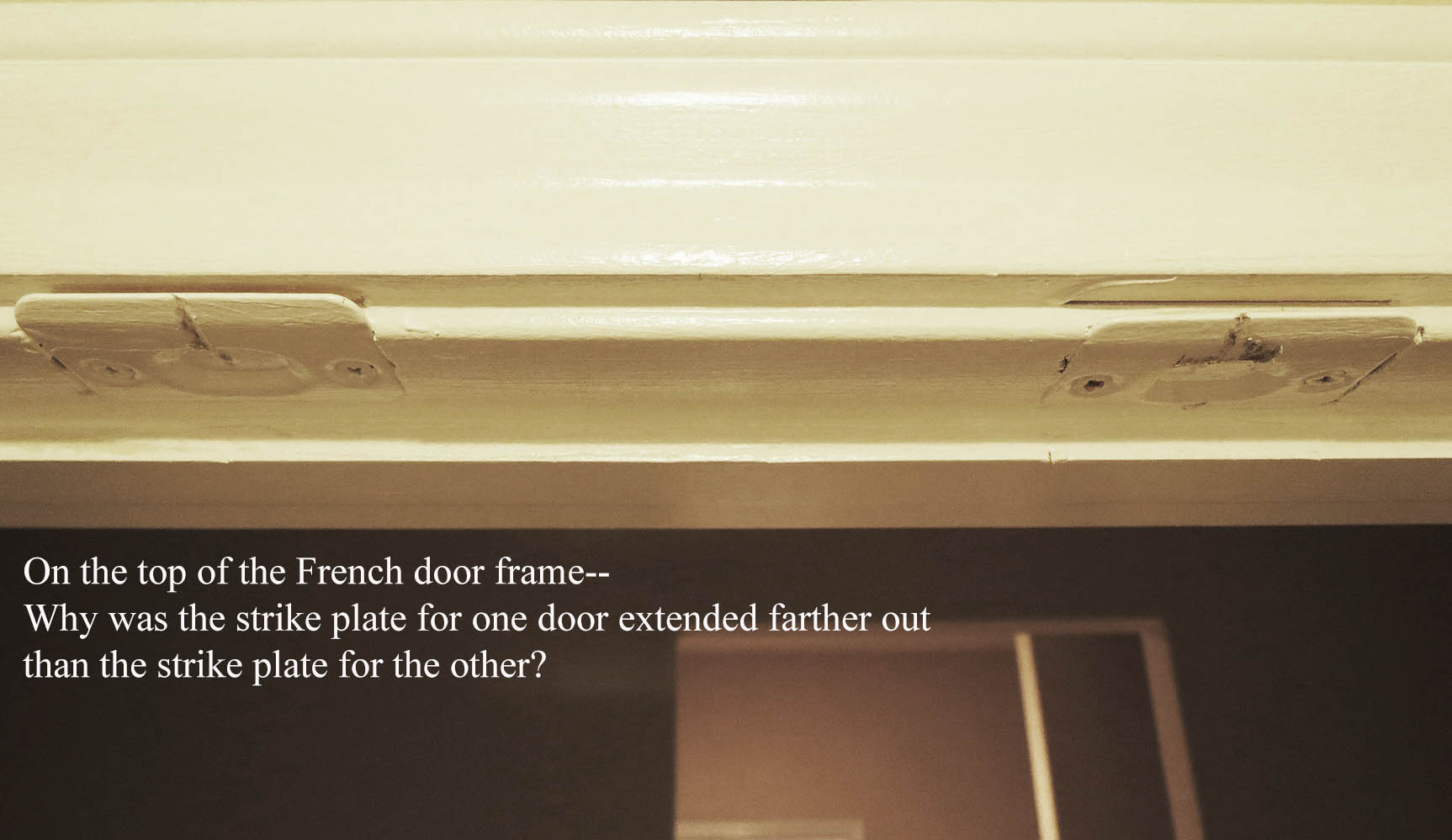
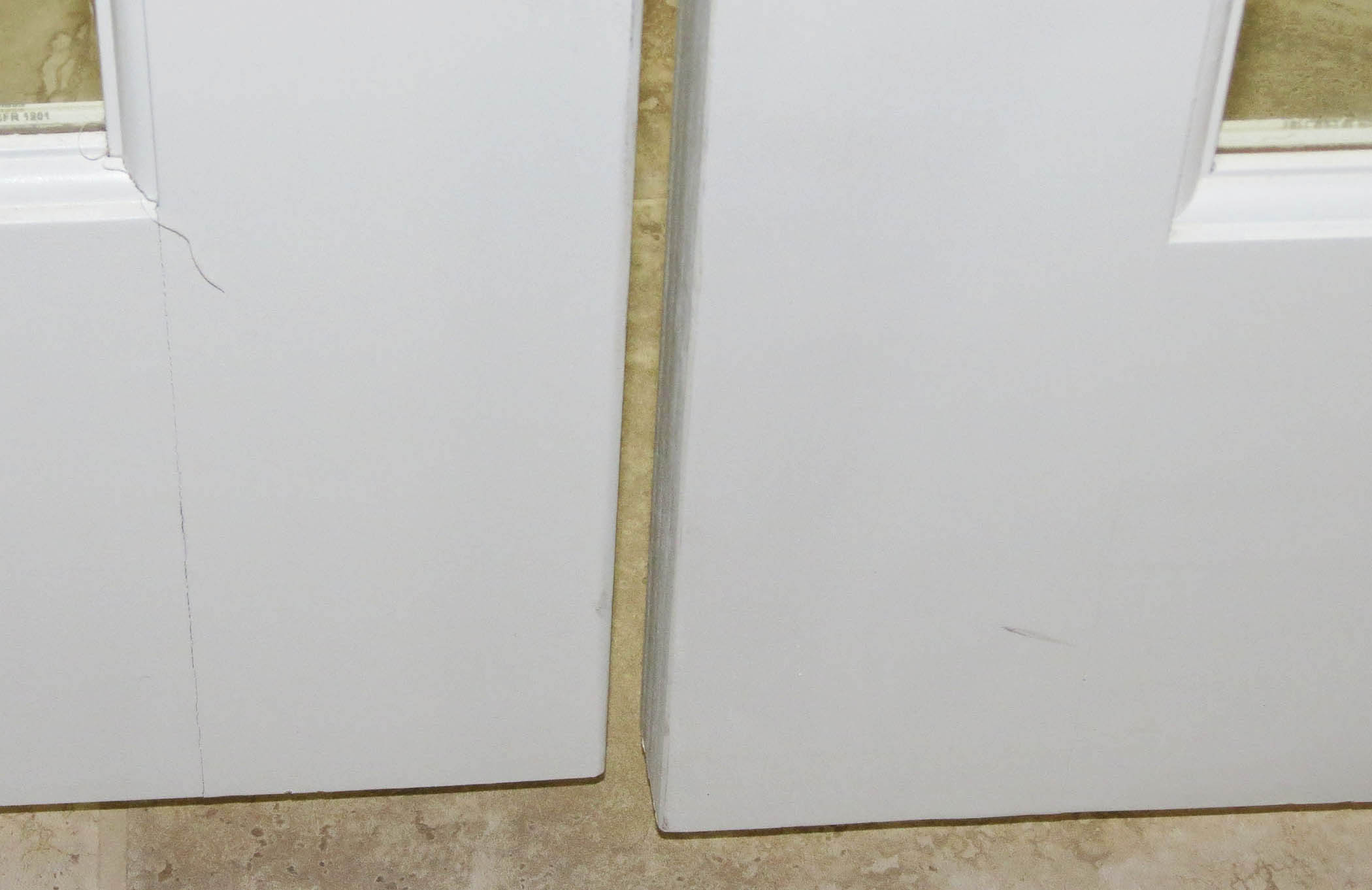 I called the Pulte customer service rep (the same one who was handling the roof) and asked him to send someone out to look at the French doors. To make a long story short — I found out that the wall on one side of the French doors was not even with the wall on the other side. Because of this, the frame was installed with a ‘twist.’ Then someone must have repositioned the strike plates above the 2 doors in an attempt to align them (instead of moving a wall). After that, the stress of the uneven walls on the twisted frame quickly started to warp and crack the doors. I think it’s a good thing that this hidden defect revealed itself so quickly, because the builder only has a 1 year warranty on doors.
After new French doors (with frame) were delivered, the wall on the left was moved in a little and the frame with both doors easily fell into place. The carpenter had to take off a baseboard, move the wall, put the baseboard back on again, repair the drywall, and then repaint. It would have been easier and less expensive (and less stressful on the homeowner) if all of this had simply been done right while the house was being built.
There was another smaller door upstairs in the furnace/air conditioning room by the attic, and it would not close because it was hanging on a slant. I guess no one had the time to do this door right either. All that it needed was wider and longer screws. Unbelievable! By this time, I was very annoyed with this Pulte built home. I was tired of dealing with numerous construction issues, big and small, day after day after day. Frustration! Here is a short video that I made while trying to close this little misaligned door. It is easy to hear the growing anger in my voice!
=============
==============
On June 24, 2016–The repair of the roof flashing and the brick/mortar in the surrounding areas was finally completed. It looked good to me. I was relieved! The gaps in the flashing were gone, and rain didn’t leak into the house from that area anymore.  BUT THEN–
OH NO!
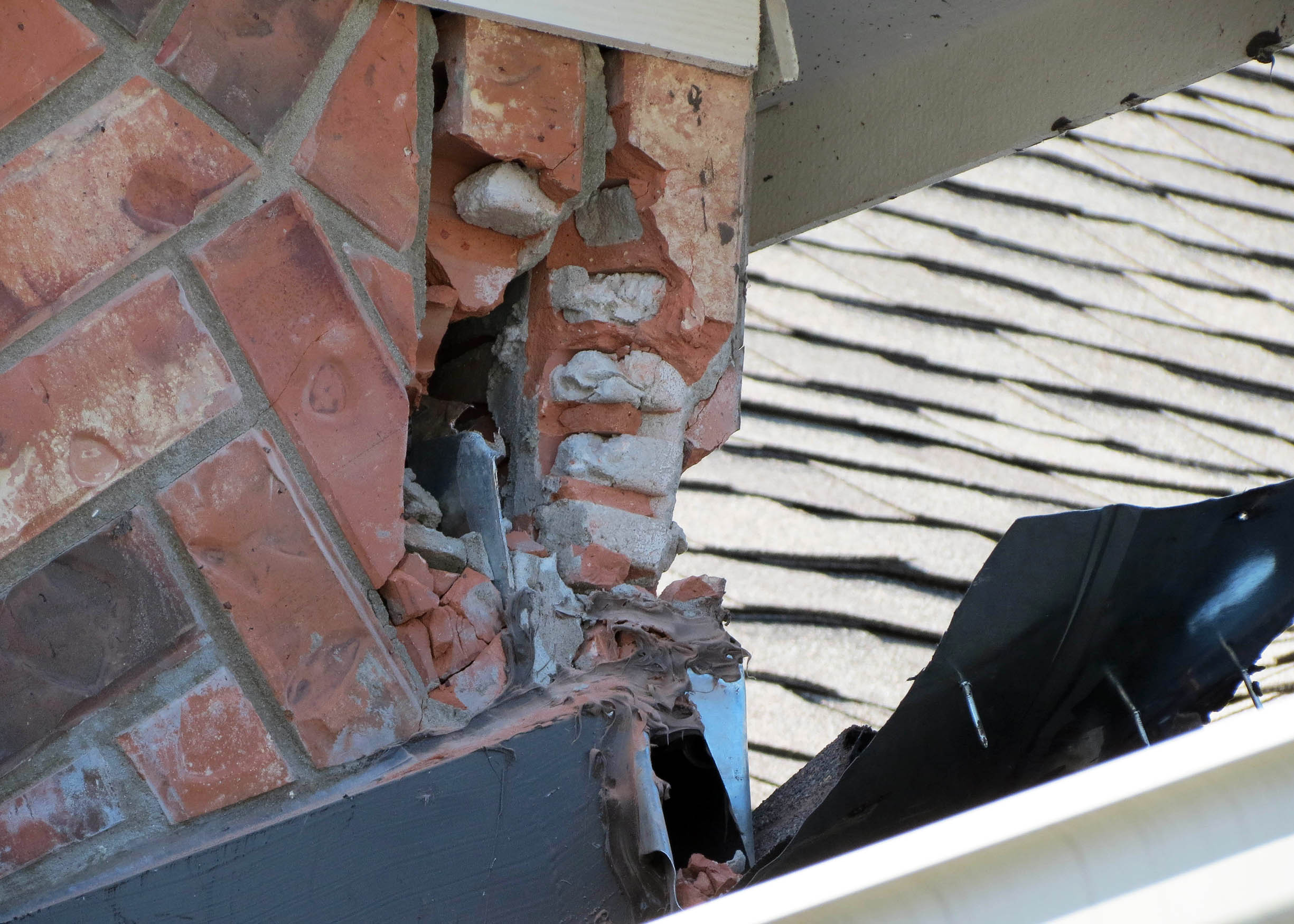
11 months later (on May 23, 2017), I looked up and saw that the brickwork Pulte had redone on the left side of the arch was already falling apart. Look at it!
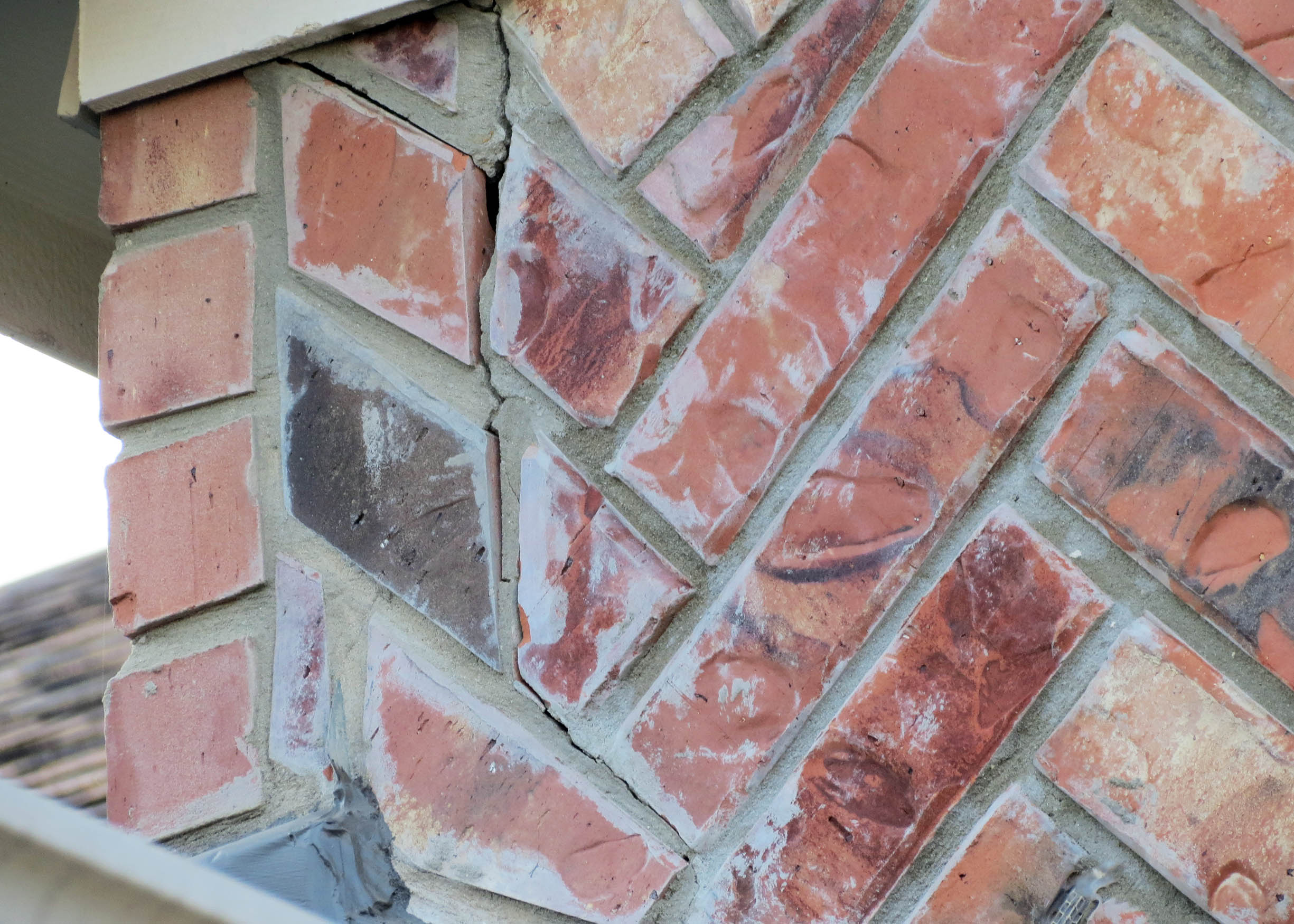 God help the homeowner! When will this nightmare end? Brick/mortar repairs should last longer than 11 months! Unfortunately, the house was 14 months old when this happened. Brick and mortar only have a one year warranty, regardless of any previous repairs.
There was a thunderstorm with strong winds predicted for the weekend, so there was no time to spend arguing with Pulte over faulty workmanship. Once again, my major concern was the possibility of water intrusion, so I quickly found an experienced local brick mason (Everardo Torres) through Home Advisor–and we paid for the repair ourselves. The brickwork that Everardo did was perfect.
In August 2016, 5 months after we purchased this house, the first signs of foundation movement began to appear on the left side of the house. Sigh. Harbingers of things to come.

By the beginning of December 2018, almost 2 1/2 years later, an expanded view of the same area in the photo above looks like this:

The day that I looked up and saw the separated soffit and wood above, I was surprised and horrified. The wood corners at both ends of the brick wall had actually opened up and dropped down! When did this happen?
I couldn’t reach this area with a 6 foot ladder, so a neighbor kindly came over (with a taller ladder) and put duct tape over the gaps t0 keep rainwater from leaking inside. A week later, I hired a local painting company (E&V) to caulk and paint the entire 2nd story loft siding and soffit area. E&V did a great job but, if the foundation keeps moving, I don’t know how long the caulk will hold.
On December 3, 2018 — I hired a home inspector to come out and specifically check the roof support system in the attic. Considering the separated areas on the exterior of the house, I was concerned that interior roof trusses might be pulling apart too. Sure enough. The inspector found and photographed a broken roof truss. We notified Pulte, but it has not been repaired yet.

We hired a structural engineer to do a baseline foundation elevation survey during the first year that we lived here. Since then, we have paid him to return two more times–so we know exactly what is happening to this foundation and how the differential movement is affecting the house.
I don’t know how much more I can take. Each time I hear another loud pop, I cringe. How bad is this going to get? Day after day, month after month — worrying about what is going to fall apart next has left me physically, mentally, and soul tired. The emotional toll has been great.
People often say that homeownership is the epitome of the great “American Dream.” I think NOT. In retrospect, we would have been better off if we had purchased some land and a tent, instead of spending a lifetime of hard-earned savings on this disintegrating Pulte house.
====================
Update: In February 2019, our structural engineer sent us a “2nd Follow-Up Assessment” report, which included specific repair instructions (in bold) regarding the damaged roof truss that our home inspector had found back on December 3, 2018. By March 2019, at least the roof truss was repaired.










 When I come across a caterpillar that looks like a porcupine with quills, I am wise and aware enough to keep my distance. I wish I could say that I know what kind of butterfly or moth the caterpillar in my photo might become; but truth be known, I have no clue!


 The more that I learned about the natural environment of Texas, the more I wanted to know. So last year, when I heard there was a









 I intend to repay my foster mom for her kindness as soon as I can. When I am a little bigger, I am going to jump up and sit on her lap and purr as loudly as I can. That way she will know that I love her as much as she has loved me.































 Before I Forget